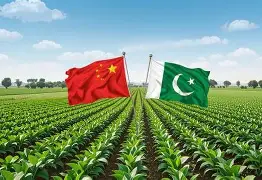
ISLAMABAD, May 06 (ABC): The government plans to double agricultural exports to China and the Gulf region by 2035 by adopting climate-smart techniques under the newly unveiled Pakistan Climate Prosperity Plan
According to an official document available with Wealth Pakistan, this plan marks a strategic shift, integrating climate resilience and green growth initiatives with the China-Pakistan Economic Corridor (CPEC) to strengthen infrastructure, boost exports to China, and attract sustainable investment.
The plan highlights that the major infrastructure, including highways, ports, and energy transmission systems along the CPEC routes, will be upgraded to withstand increasing environmental stress. This includes strengthening road networks and improving the resilience of Gwadar-linked logistics chains, which are critical for bilateral trade.
Under the plan, Pakistan will develop its first-ever Agricultural Trade Hub at Gwadar Port to leverage the CPEC’s connectivity to access larger markets and improve cold-chain logistics.
The government also plans to transition existing Special Economic Zones (SEZs), many developed under the CPEC, into Green Economic Zones (GEZs). These zones will adopt clean energy, circular economy practices, and environmentally sustainable manufacturing to meet international standards and boost export competitiveness, including in Chinese markets.
The integration of climate-smart policies with the CPEC will not only protect critical investments but also position Pakistan as a regional hub for green manufacturing and trade.
By aligning climate resilience with economic corridors, the country aims to unlock new investment opportunities, enhance export capacity, and deepen economic cooperation with China.
The other highlights of the plan include a reduction in the postharvest losses by 20% for wheat, cotton, and rice by 2028, lowering water consumption in agriculture by 20% through efficient irrigation, water pricing, intercropping and precision farming by 2030, expanding agroforestry initiatives to 50,000 hectares to enhance soil and water conservation by 2030, transporting 50% of perishable exports through modern cold chain networks by 2035, rootstock innovation on critical horticulture varieties by 2028, leveraging blue carbon initiatives to create new revenue streams from fisheries conservation efforts, optimizing 30% of agricultural subsidies (approximately PKR500 billion/year), providing climate risk financing tools, including index insurance, livestock coverage, and climate-linked loans for 30% of smallholder farmers and agribusinesses across the value chain by 2030.
The plan envisions that such measures will transform climate challenges into economic gains while reinforcing Pakistan’s strategic partnership with China under the evolving CPEC framework.