Expanding high-speed rail links boost China’s regional economic cooperation
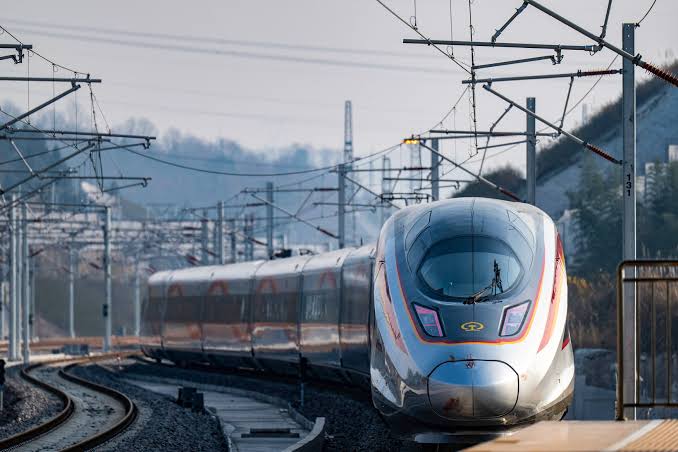
Islamabad Oct 18,2026: China’s expanding high-speed railway network is strengthening connectivity between major economic centres, reducing travel times and supporting regional integration, as the country continues to invest in modern transport infrastructure and improve links between industrial and commercial markets.
China opened four high-speed railway sections in September this year, connecting Xiong’an with Shangqiu, Xi’an with Ankang, Yichang with Xingshan and Harbin with Yichun, extending modern rail connectivity across northern, northwestern, central and northeastern regions of the country.
The expansion comes amid sustained railway investment and growing passenger demand. According to China State Railway Group Co., Ltd., fixed-asset investment in the railway sector reached 511.8 billion yuan during January-August 2026, an increase of 1.5% year-on-year. Railway passenger journeys reached a record 3.32 billion during the same period, rising 3.9% from a year earlier.
Dr Hassan Daud Butt, Senior Advisor to Energy China and former Project Director of the China-Pakistan Economic Corridor (CPEC), told Wealth Pakistan that China’s latest railway expansion demonstrated how individual infrastructure projects could generate wider economic benefits when integrated into a national transport network.
“Connectivity produces the greatest economic return when a new line does not end with the cities it directly serves but links into other corridors, industrial centres and markets. That multiplies the economic catchment area of the infrastructure and can encourage investment well beyond the railway itself,” he said.
Butt said China’s approach highlighted the importance of treating railway development as part of a broader economic strategy rather than focusing exclusively on the construction of individual transport links.
He noted that integrated railway networks could improve access to markets, facilitate the movement of people and strengthen economic connections between regions, creating opportunities for businesses and industrial development.
China’s continued investment in railway infrastructure also demonstrates the importance of long-term network planning, particularly as transport demand increases and economic activity expands across different regions.
For developing economies, the experience offers insights into how coordinated infrastructure development can support regional connectivity and help integrate production centres, commercial markets and urban economies.
Butt said Pakistan could draw important lessons from China’s approach as it evaluates railway modernisation and regional connectivity initiatives under CPEC.
“Pakistan needs to think increasingly in terms of economic corridors rather than standalone transport projects. Railways should connect ports, industrial zones, agricultural markets and major urban centres in a way that reduces logistics costs and creates commercially useful movement across the network,” he said.
He emphasised that the economic benefits of railway investment depended not only on the quality of infrastructure but also on how effectively different routes were connected with industrial activity and logistics networks.
“China’s experience demonstrates that the economic value of a railway network comes from how effectively different regions and economic centres are connected. For Pakistan, modernising the Karachi-Peshawar ML-1 corridor could deliver wider economic benefits if it improves freight reliability, strengthens links with industrial zones and reduces the cost of moving goods between production centres and ports,” Butt said.
The proposed modernisation of Pakistan Railways’ Main Line-1 (ML-1) is considered an important component of the country’s longer-term transport development plans, with potential implications for domestic freight movement, passenger services and connectivity between major economic centres.
While China’s newly opened high-speed railway sections primarily strengthen passenger connectivity, Pakistan’s railway modernisation requirements also involve improving freight efficiency, logistics services and the movement of goods between industrial centres and seaports.
Engr. Saqlain Ahmed, Assistant Professor at HITEC University, Taxila, said Pakistan’s geographical position offered significant potential for developing transport connections with China, Central Asia, Afghanistan and maritime trade routes serving the Middle East and other international markets.
However, he stressed that geographical advantages alone were insufficient to establish commercially successful trade corridors.
“Competitive transit services require efficient border procedures, compatible transport arrangements, reliable logistics infrastructure and predictable movement of cargo,” he told Wealth Pakistan.
Ahmed said Pakistan needed to complement railway infrastructure development with improvements in operational efficiency, technical expertise and institutional capacity.
He suggested that cooperation with China should extend beyond infrastructure financing to include railway operations, technical training, signalling technology, maintenance systems and logistics management.
“Pakistan can benefit from Chinese expertise in railway engineering and network management, but the objective should be to strengthen domestic operational capabilities. Training railway engineers, technicians and logistics professionals, developing modern maintenance practices and introducing data-driven freight management could create lasting improvements in the sector,” he said.
Ahmed said modern railway systems increasingly depended on efficient operations, reliable maintenance and the effective use of technology to improve service quality and reduce costs.
Strengthening these capabilities could help Pakistan make better use of existing railway infrastructure while preparing for future network expansion and closer integration with regional transport corridors.
He also emphasised that railway modernisation required an appropriate financing and implementation framework, particularly given Pakistan’s fiscal constraints.
According to Ahmed, infrastructure development needed to be supported by realistic investment planning and sustained improvements in operational capacity to ensure that railway projects delivered long-term economic benefits.
China’s continuing high-speed railway expansion illustrates the potential of integrated transport networks to strengthen regional economic connections and improve mobility across major population and commercial centres.
For Pakistan, experts believe the key lesson lies in linking railway modernisation with industrial development, logistics efficiency and regional connectivity while building the technical and financial capacity required to sustain improvements.
Ahmed stressed that Pakistan’s railway development priorities should be guided by practical financing arrangements, stronger operational capabilities and the need to create efficient transport services that support trade and economic activity.