ISLAMABAD, Mar 22 (ABC): In a move to strengthen research and post-harvest management in Pakistan’s date palm sector, the Ministry of National Food Security and Research has proposed a Rs592.364 million project to upgrade the Date Palm Research Institute (DPRI) in Khairpur.
According to official documents available with Wealth Pakistan, the five-year initiative will run from July 2026 to June 2031, and will be implemented by the Pakistan Agricultural Research Council (PARC).
The project is aligned with the government’s development priorities under the 5Es Framework, the 13th Five-Year Plan, and the National Agriculture Innovation and Growth Program (NAIGP), focusing on strengthening innovation and commercialization in the date palm sector.
The initiative strengthens research commercialization and agro-processing systems, promotes exports through premium date products, and supports climate resilience under the environment pillar. It also strengthens processing infrastructure under Energy and Infrastructure, supports research systems under E-Pakistan, and enhances rural livelihoods under Equity and Empowerment.
The upgradation of the DPRI aims to promote high-value horticulture by propagating elite date cultivars through tissue culture, introducing improved production technologies, and enhancing post-harvest processing to increase export-oriented value-added products.
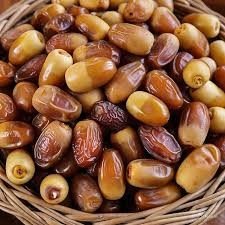
Specific objectives include evaluating and rapidly propagating exotic and elite varieties of date palm — such as Ajwa, Barhi, Deglet Noor, Hayani, Kenta, Mabroom, Medjool and Piarom — through tissue culture techniques. The project will also develop optimal production technologies to minimize yield gaps and introduce efficient processing methods to reduce post-harvest losses, and expand the commercialization of value-added date products.
Among the key deliverables, the project plans to develop orchards of elite date varieties in Khairpur Mir through modern practices such as pollination, irrigation, fertilizer management, and pest control.
A state-of-the-art tissue culture laboratory with a capacity of 200,000 plants per year will be established, targeting intervention on about 3,000 acres annually in the initial phase. The facility will later be expanded to produce up to 400,000 plants per year, enabling replacement of around 6,000 acres of orchards annually.
The project also includes installing 40 solar tunnel dryers, each with a loading capacity of 1.0 tons, along with standard-scale processing and packaging facilities at the farmers’ fields to improve post-harvest handling and product quality.
In addition, around 10 export-grade value-added date products will be developed each year to convert date wastage into commercially viable items. Capacity building for stakeholders—approximately 1,000 individuals annually—is also planned to strengthen skills across the date production and processing value chain.
By promoting high-value horticulture, improving processing infrastructure and strengthening research systems, the proposed project is expected to enhance the competitiveness of Pakistan’s date industry while supporting rural livelihoods and agricultural development.
Rs592m project planned in Khairpur to boost date exports