By People’s Daily reporters
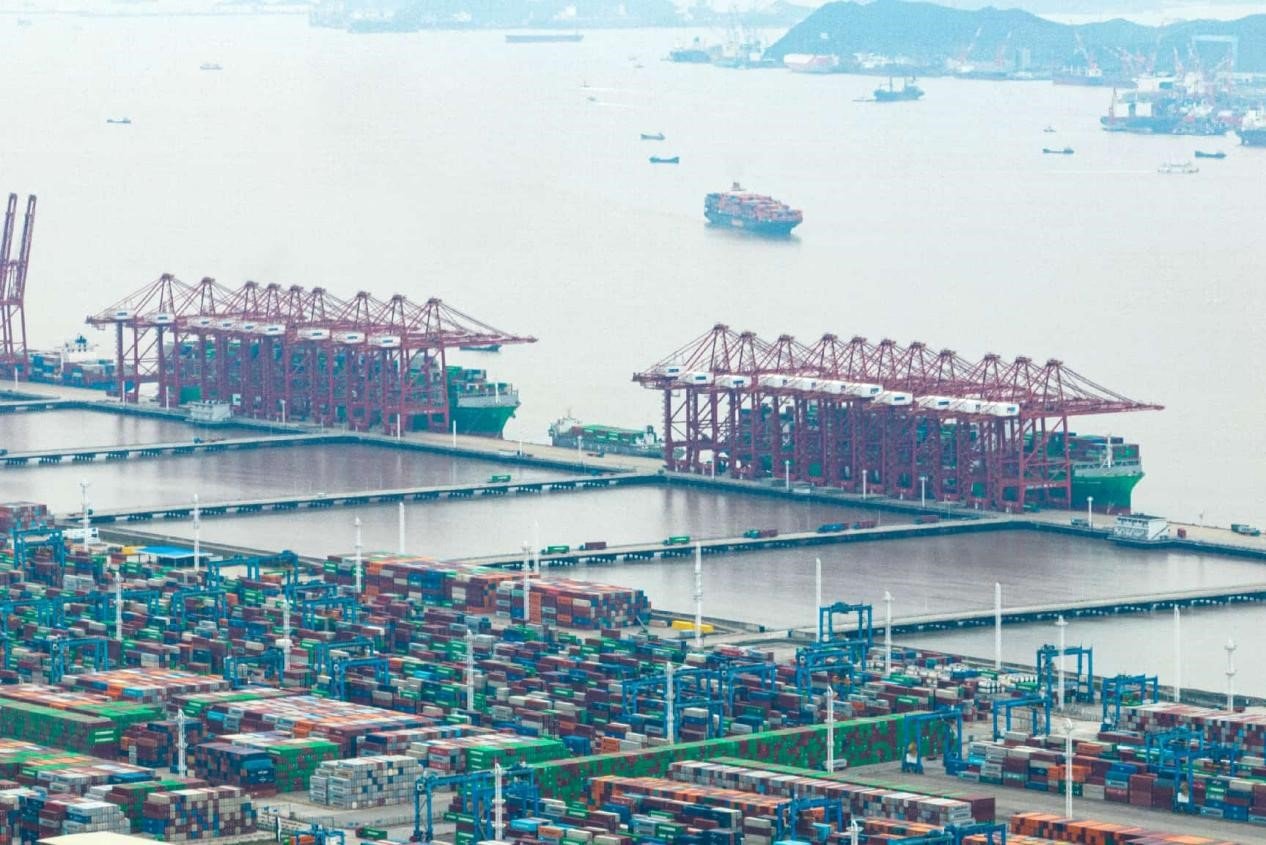
China achieved a significant milestone in 2025, with total electricity consumption exceeding 10 trillion kilowatt-hours for the first time. This figure surpasses the combined electricity use of the United States, Germany, Japan, and India. Power consumption serves as a clear indicator of China’s economic trajectory.
Innovation and Green Transition Drive Manufacturing Power Demand
At present, Dishang Kenny, a garment company in Weihai, east China’s Shandong province, is racing to keep up with a surge in orders. On the factory floor, automated cutting machines slice through fabric with precision, automated guided vehicles shuttle materials across floors, and intelligent hanging systems assist workers with sewing.
“Since resuming work after the Spring Festival holiday, our electricity load has remained high, with power consumption rising about 15 percent year on year,” said Zhu Lihua, chairman of Dishang Group, the parent company of Dishang Kenny.
According to Zhu, after adopting a digital management system, the company’s production efficiency has improved by more than 30 percent compared with traditional operations.
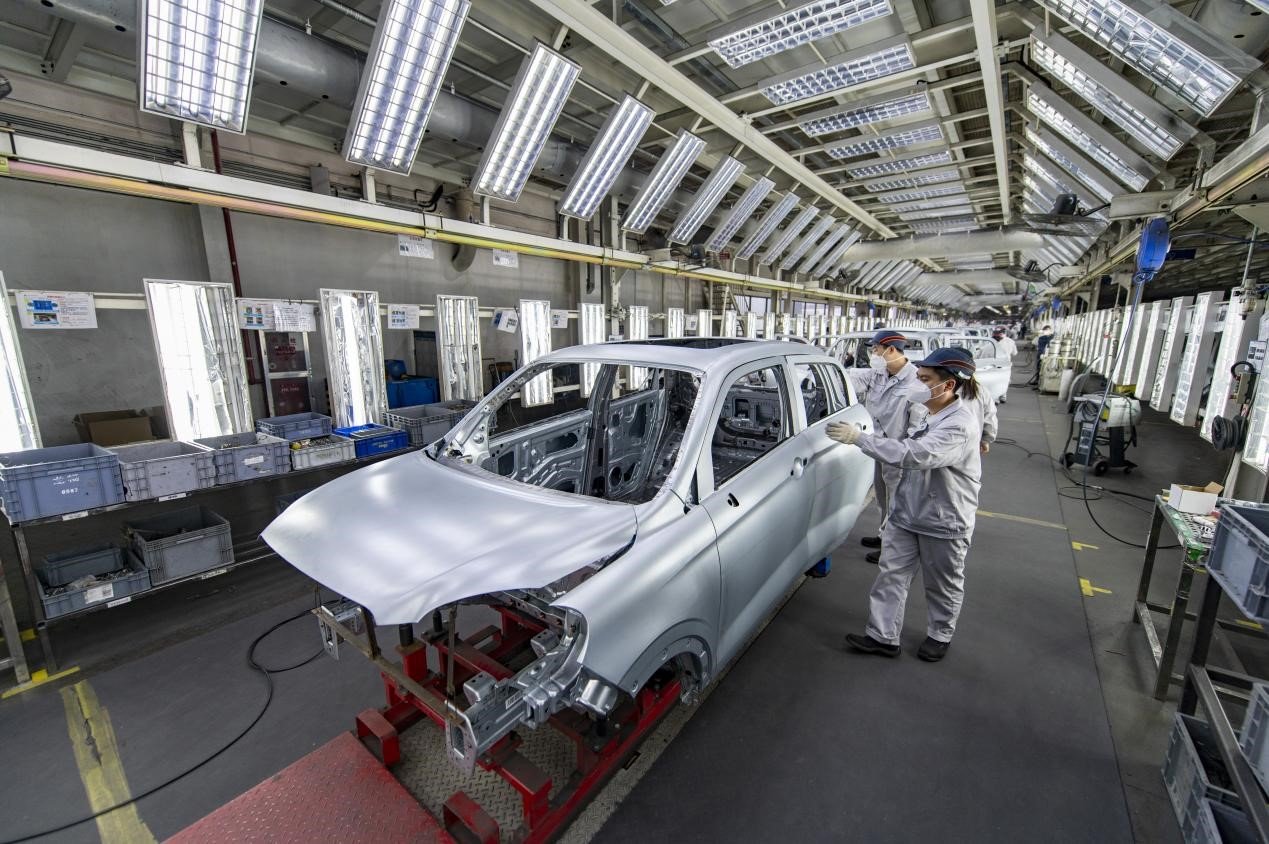
As traditional industries accelerate their move toward higher quality, emerging industries pursue innovation and the green transition gathers pace, the rapid growth of new quality productive forces is pushing up electricity demand in the industrial sector.
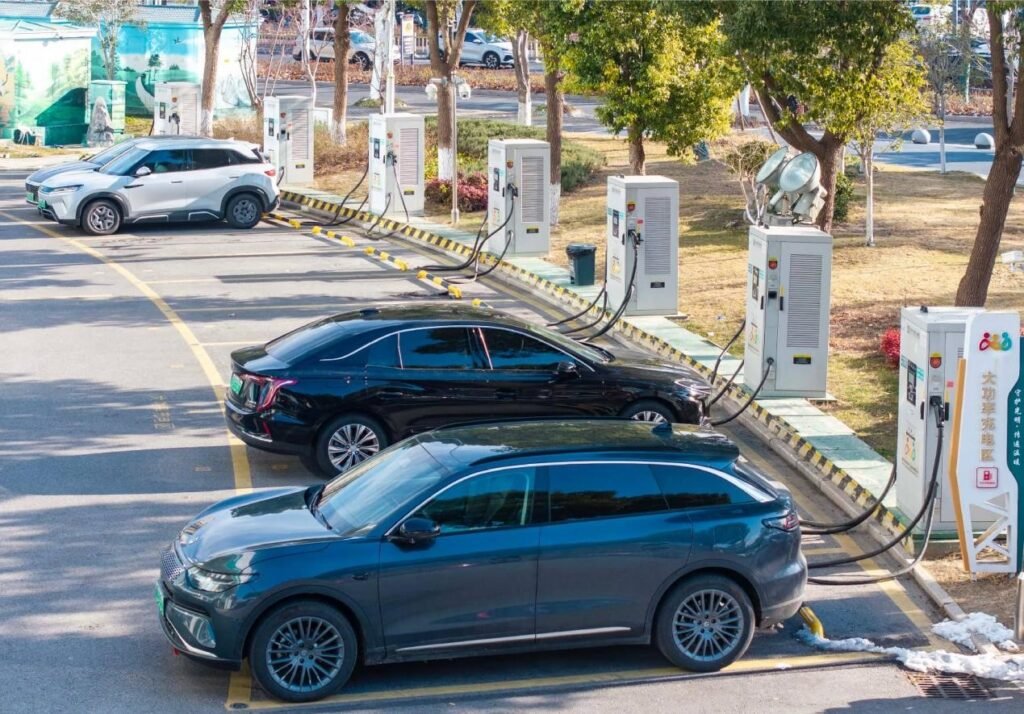
In Wuhu, east China’s Anhui province, industrial robots undergo their final tests before deployment at the manufacturing and delivery center of EFORT Intelligent Robot Co, Ltd. Robots twist, stretch and wave their arms as engineers carry out performance checks.
“Our production in the first quarter is expected to grow by about 30 percent year on year,” said Zhang Wei, the company’s vice president. Data from State Grid Anhui Electric Power Company show that electricity consumption by robot-manufacturing-related enterprises in Anhui rose 26.15 percent year on year in January and February.
According to Xu Lijin, chairman of Wuhu Robot Industry Development Group, the robot industry is rapidly emerging as a major growth driver in high-end equipment manufacturing as intelligent technologies advance and application scenarios expand.
“Six emerging sectors — including integrated circuits, aerospace, biomedicine, low-altitude economy, new energy storage and intelligent robotics — are expected to reach new levels of output by 2030,” he said. “These industries will become key engines driving growth in electricity demand.”
In 2025, electricity consumption by China’s high-tech and equipment manufacturing industries rose 6.4 percent year on year, three percentage points higher than the average growth rate of the manufacturing sector.
E-commerce and Tourism Spark Surging Power Use
As evening fell, the makerspace district in Lizu village of Yiwu, east China’s Zhejiang province glowed with lights. Livestream hosts were selling a range of local specialties including tie-dye products and farm produce in studios via livestream.
While consumers placed orders online, express delivery companies rushed to process shipments. On Feb. 26, Yiwu handled 56.3 million parcels in a single day, setting a new record.
“As consumer preferences become more personalized and quality-oriented, new consumption models such as livestream commerce have expanded rapidly. Here, international trade meets rural tourism, allowing the village to share the benefits of development,” said Fang Haolong, Party head of Lizu village.
During the first week after the Spring Festival holiday, electricity consumption in Zhejiang’s internet and related services sector reached 112 million kilowatt-hours, registering double-digit growth. Power use by the express delivery sector rose 5.2 percent, while electricity consumption in information transmission, software and IT services increased 11.9 percent, remaining at a high level.
“Consumption patterns are changing,” said Liu Cong, chairman of the Jiangsu Federation of Industry and Commerce. “Experiential and scenario-based consumption is gaining popularity. Cultural, tourism, performing arts and catering sectors are integrating more rapidly, while new consumption scenarios continue to emerge, stimulating spending and driving growth in related industries.”
Data, Computing Power and AI Fueling Electricity Boom
In Gui’an New Area in southwest China’s Guizhou province, one of China’s largest clusters of hyperscale data centers, construction of the 500-kilovolt Machang power transmission and transformation project, with a total investment of 510 million yuan (about $73.8 million), is entering its final stage.
Once completed, the project will provide 2 million kilowatts of power supply capacity, meeting the electricity needs of 26 large data centers and nearly 300,000 standard server racks.
“What drives AI is computing power, and what drives computing power is electricity,” said an executive of the China Electricity Council. China has made significant progress in building new infrastructure such as AI systems and 5G network, greatly boosting electricity demand in related sectors.
From 2021 to 2025, electricity consumption in the internet data services sector grew at an average annual rate of 35.9 percent.
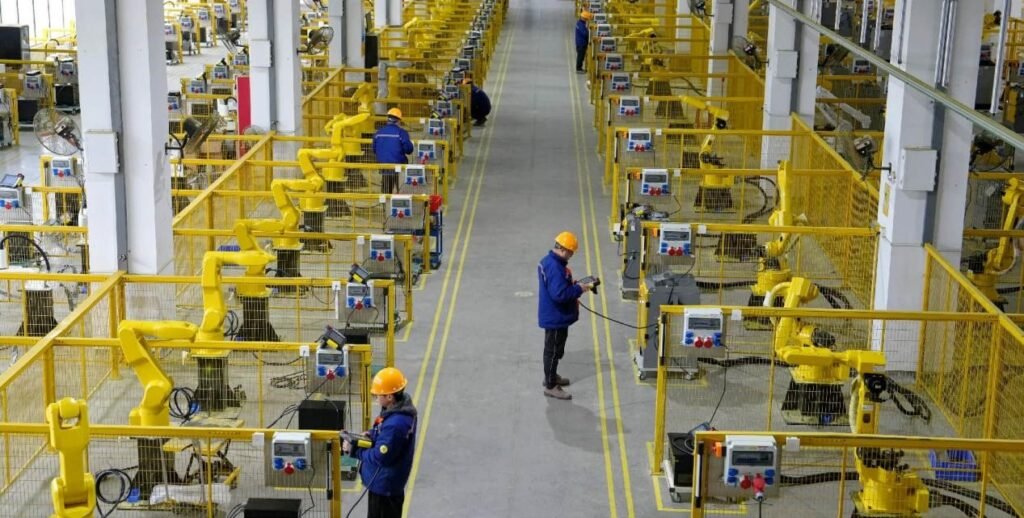
Meanwhile, as the number of new energy vehicles continues to rise rapidly, China is accelerating the rollout of charging infrastructure nationwide. This not only addresses vehicle energy needs but also supports new consumption scenarios such as road trips and rural tourism.
By December 2025, China had built more than 20 million electric vehicle charging facilities, with the total expected to reach 28 million by the end of 2027. Investment in charging infrastructure has maintained strong growth, driving nearly 50 percent year-on-year growth in electricity consumption within the charging and battery-swapping sector in 2025.
China’s rise as a global electricity powerhouse has unfolded steadily over the past decade. In 2011, China became the world’s largest electricity producer in terms of installed power generation capacity and output, and its per capita electricity consumption surpassed the global average.

In 2015, the last group of people without access to electricity in China finally got connected to power use. In 2020, every village in China gained access to power supply for productive use. And in 2025, total electricity consumption across the country exceeded 10 trillion kilowatt-hours for the first time.
China has built the world’s largest clean power supply system, with an average power supply reliability rate exceeding 99.9 percent. Behind this full-strength electricity supply lies the vitality of countless households — and the steady rise of a nation.