TAPI pipeline developments boost Pakistan’s hopes for regional gas supplies
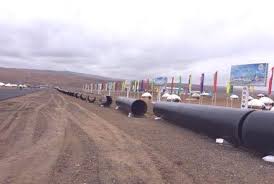
Islamabad, Oct 09,2026: Progress on the Turkmenistan-Afghanistan-Pakistan-India (TAPI) gas pipeline is reviving prospects for Pakistan to secure a new source of Central Asian gas, but experts say the country will need to accelerate legal, commercial and infrastructure preparations to benefit from the project’s renewed momentum.
Construction is advancing on the 153-kilometre Serhetabat-Herat section of the pipeline inside Afghanistan. According to Turkmenistan’s state oil and gas authorities, around 700 Turkmen specialists and more than 250 units of construction and specialised equipment have been deployed on the project.
French students renew school blockades as education minister invites representatives for talks
The workforce includes engineers, welders and gas specialists, alongside heavy construction machinery.
The overall TAPI pipeline is planned to run about 1,814 kilometres from Turkmenistan through Afghanistan and Pakistan to the Indian border, with a designed capacity of 33 billion cubic metres of natural gas annually.
The project gained further momentum following high-level Turkmen-Afghan talks in August 2026.
Turkmenistan said work on the Serhetabat-Herat stretch was progressing rapidly after construction was launched in September 2024, with the giant Galkynysh field providing the gas resource base for the pipeline.
Pakistan, Bahrain vows to boost bilateral cooperation on trade
Pakistan’s Ministry of Foreign Affairs lists the project cost at about $10 billion based on the feasibility study and describes TAPI as part of the country’s energy security strategy. Islamabad and Ashgabat signed a Joint Implementation Plan in 2023 to accelerate work on the Pakistan section.
Pakistan and India are each expected to receive 47.5% of the contracted volumes, while Afghanistan would receive the remaining 5%, according to the Asian Development Bank.
Maliha Mehmood, Research Assistant at the Institute of Regional Studies, told Wealth Pakistan that TAPI could strengthen Pakistan’s energy security by adding a land-based source of gas from Central Asia to a system that remains vulnerable to fluctuations in international LNG markets.
Trump says Iran deal ‘isn’t really something that I want to do’
“An overland pipeline would reduce Pakistan’s dependence on seaborne energy supplies and provide an additional option when global LNG prices or maritime routes come under pressure,” Mehmood said.
Mehmood said the project could also enhance Pakistan’s importance as an energy transit state by linking resource-rich Central Asia with major South Asian markets.
Dr Masood Ahmed, Assistant Professor at the Department of Governance and Public Policy at the National University of Modern Languages, Islamabad, said the project’s long-term value would ultimately depend on whether it remained commercially competitive.
Vatican’s top diplomat on maiden visit to Pakistan
“Pakistan will have to compare the delivered cost of TAPI gas with LNG and other available supply options. The final gas price, transit fees, financing costs and security arrangements will determine whether the project is economically sustainable,” he said.
Ahmed said the commercial case would also depend on whether productive sectors could absorb the gas at competitive prices.
“If TAPI can provide reliable gas at a price that supports industry, fertiliser production and other gas-dependent sectors, its economic value would be significant. But if the delivered cost becomes too high, the strategic benefits alone may not be enough to justify long-term commitments,” he maintained.
WASA Rawalpindi launches crackdown on water bill defaulters
He added that predictable demand, payment security and stable contractual arrangements would be essential because cross-border pipelines require sustained commercial flows over many years to recover investment costs.